There was a time – and I know you remember it, if only dimly – when you could wander down to the break room, pour yourself a cup of terrible coffee, and exist, unbothered, for twelve glorious minutes. No one knew where you were, nor did anyone need to know. You were simply… between things. Thinking, maybe. Or staring at the walls. Maybe reading a 5-year-old copy of Martha Stewart Living from the pile of periodicals strewn on the end table next to the couch. It really didn’t matter because you were gloriously off the grid.
Sadly, that era is gone and, in its place, we have the Status Field.
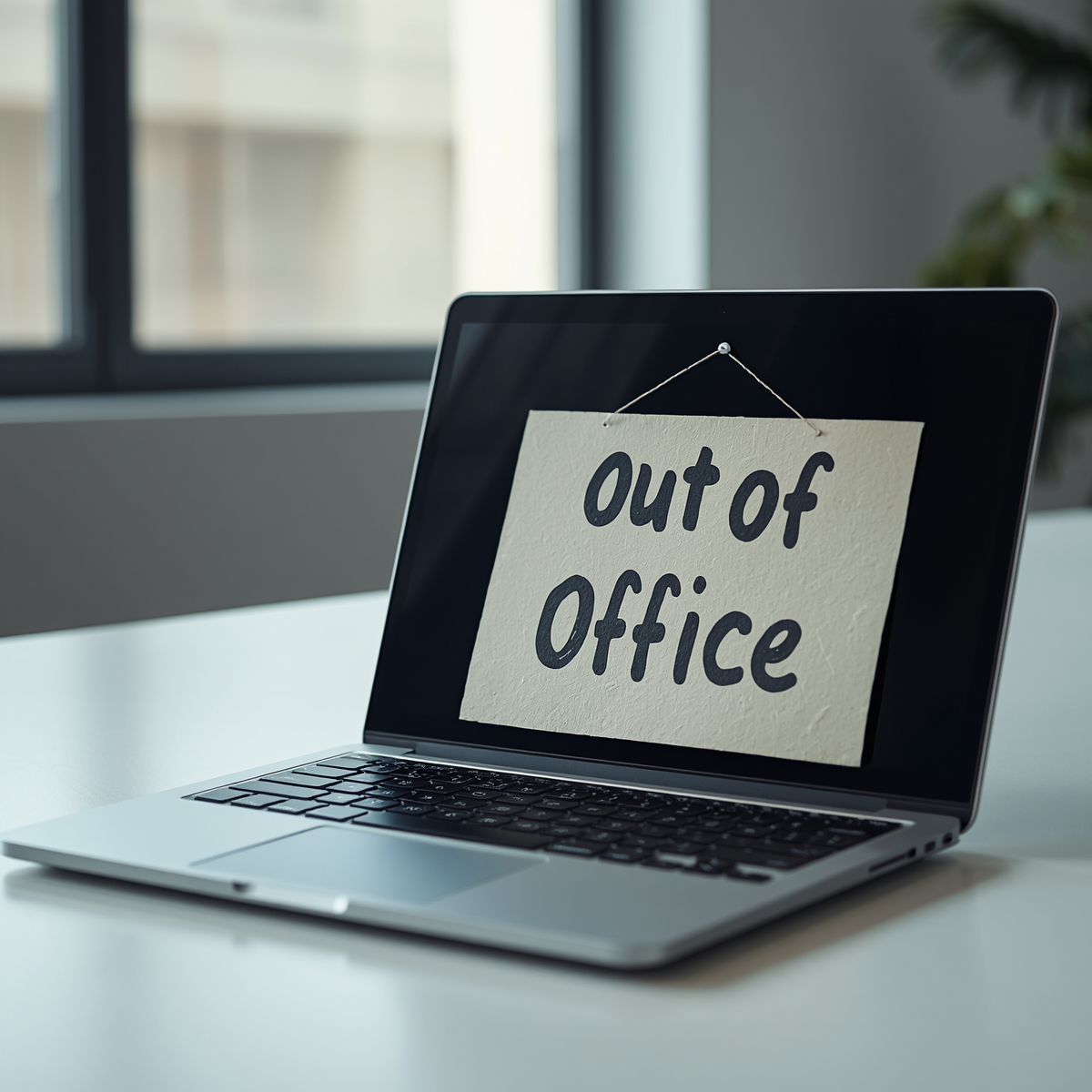
Whether your workplace runs on Slack, Teams, Google Chat, or Facebook Messenger, the expectation is the same: your digital presence must be accounted for, at all times, during all working hours, with the precision of Artemis II mission control. The little colored dot beside your name – green, yellow, red, that ambiguous grey – has become the modern-day equivalent of clocking in, and lord help you if that dot goes grey for longer than it takes to use the bathroom, because somewhere, someone is watching.
It’s accountability theater, really: the performance of availability in a world that has conflated being reachable with being productive.
A Taxonomy of What Your Status Actually Means
Let’s be honest now: the status you post, and the reality of your afternoon are not always the same. Here’s a more accurate field guide, from out here in the real world, of what your workplace “status” really means:
- “In a meeting” might signify you are in an actual meeting, It might also mean you’re staring at the middle distance after having endured forty-seven meetings this week alone (and it’s only Wednesday) and you simply need people to stop making demands of you for twenty minutes. You’re present, technically, but your soul has left the building.
- “Focusing” – a personal favorite, particularly on platforms that let you schedule a “Focus Block” – means you have erected a small digital velvet rope around yourself. “Focusing” communicates that you are “in the zone” where deep, important work is underway. It does not, however, specify that the work involves watching all of Britney Spears’ official music videos in strict chronological order, from “…Baby One More Time” through the Blackout era and onward, because someone mentioned “Toxic” in a meeting and now you’re three decades deep into a YouTube spiral that started as research and has become spiritual.
- “Away” means you stepped away from your desk and forgot to change it back two hours ago. Or you changed it on purpose and are currently assembling a charcuterie board with items procured entirely from the vending machine (Gardetto’s, a bag of M&Ms, a sleeve of Animal Crackers) arranged with more care and architectural precision than anything you’ve accomplished at work this quarter. You’ve got the pretzels doing the heavy lifting in the corner, the M&Ms are the accent color, and you’re quite proud of it.
- “On a call” can, of course, mean you are on a call. It can also mean you are avoiding a call you were supposed to make an hour ago and are using this status pre-emptively. It’s aspirational really; just like your organizational culture.
- “BRB” means you are either returning shortly, or you just typed “BRB” and then walked directly into another meeting, started a new task, or went to go put out another fire. You will eventually surface again sometime before the end of the day. Maybe.
The Myth of the Open Door (Digital Edition)
What we’ve built here, collectively, is a culture in which the expectation of instant availability has been woven so deeply into how we work that we now police our own downtime. We’ve become workers droids who pre-emptively justify our absence and change our status before we take a walk around the block to clear our head because, apparently, a fifteen-minute absence requires documentation. And oh boy…do we feel guilty about the grey dot and the unanswered message that sits there (read but not yet responded to!) while we do something as audacious as eat lunch.
But what are we gaining from all this? The illusion of connectedness? Maybe. For those managers and organizations that aren’t sure they trust their people, they have the comfort, I guess, of knowing (for a moment) that everyone is accounted for. It’s a new version of the old-school time clock for the knowledge-worker/desk-bound class.
What we’re not gaining is the kind of creative thinking that happens precisely when people are not staring at a screen waiting for the next message to land.
A Modest Proposal
I do wonder what would happen if everyone, for a designated stretch of time, simply didn’t have a status? No dot, no label, no “focusing” or “away” or the dreaded “Do Not Disturb” that, perversely, seems to invite more disturbance. What if being unreachable for an hour were treated not as a crisis or an anomaly, but as a normal, healthy, expected part of a working human’s day?
Here’s my guess: most of the things that seemed urgent would resolve themselves, because they always do. We would discover that the questions that feel like they need an answer right now rarely do. We would find that the people you’re surround by every day – your team, your colleagues, yourself – might emerge from that hour with a thought they hadn’t had before or an idea that simply needed some peace and quiet to take shape.
We’ve normalized the expectation of perpetual availability as a baseline condition of employment, but maybe it’s time to normalize the opposite. And no; not as an exception or a perk or a “wellness initiative” (please, not another wellness initiative), but as a simple acknowledgment that people who are allowed to be unreachable – occasionally, on purpose, and without explanation – come back better.
The break room is still there, metaphorically speaking, so go wander. And when you do, set your status to whatever you like.
Or don’t set it at all.