
Most of what gets written about employer brand comes from a certain altitude, where global companies employ talent attraction teams, refine their EVP frameworks, polish their LinkedIn Life pages, and have at least one person whose title includes the words “employer brand.” It’s a real discipline, and I respect the people who practice it well.
But most people don’t work for those companies; they work for the community hospital with 1,000 employees, the family-owned distributor that’s been on the same stretch of highway since the Eisenhower administration, the credit union, the school district, and the insurance agency with the founder’s name still on the sign. Nobody in those organizations has a line item for employer brand, and if you asked the HR director about her EVP, she might reasonably assume you meant a new vice president.
And yet every one of these employers has a brand – and in a metro area of a few hundred thousand people that brand is fully formed, widely distributed, and almost entirely outside anyone’s control. It lives in the carpool line and the church parking lot, at the hair salon, and with the cousin who worked there for eight months a decade ago and still has opinions about it. Here where I live, as in any geographic area where people tend to stay put, an employer’s reputation can stretch back two or three generations. And it gets repeated far more often than it gets revised.
Smaller markets add another wrinkle, which is that nearly everyone is a semi-insider. You may never have worked at the community hospital, but you’ve sat in its emergency room, visited your aunt on the fourth floor, and watched the nurses run themselves ragged on a short-staffed weekend. You bank at the credit union, your kids attend the local schools, and your neighbor’s son drives a truck for the distributor.
The line between customer experience and employee experience, which large companies can keep reasonably distinct, barely exists when the employer is also the place you go when you’re sick.
Fans are rare; refusals are common
I got to thinking about this when Bill Boorman made the point on this post over the weekend that in these days of “easy apply” buttons and everyone applying for everything, the employer brand does its real work in job search and less so during the attraction phase.
But out here in flyover country, I see employer brand less as the force that makes people want to work somewhere than as the force that makes them absolutely certain they never will.
Fandom, as Bill calls it, is rare, since very few people in a mid-sized city lie awake hoping for a chance to process claims at the regional insurer. What’s common, however, and remarkably durable, is the flat-out refusal:
“Oh, hell no. I’d never work at Acme Insurance; they’ve been shady since the fifties!”
That’s the type of sentiment that never shows up in a TA report, because the people who say it never apply. The experienced nurse who left over a bad manager several years ago has since told everyone she knows, along with everyone those people know, and none of them will ever appear as a declined candidate or a withdrawn application. Nobody can count a candidate who crossed you off the list before your job posting existed, and in a market where the supply of experienced nurses or licensed adjusters or CDL drivers is finite, those absences add up.
The numbers, for what they’re worth, support the instinct. In Monster’s 2026 Job Search Deal-Breakers Report, 56% of U.S. workers said negative reviews or a poor reputation make them less likely to apply, putting reputation just behind unpaid take-home assignments on the list of things that stop candidates before they start. And reputation now has a new middleman in AI. A Built In survey published this month found that 88% of job seekers used AI to research or discover employers over the past year, and 53% decided against applying somewhere based on what the AI told them. (thanks Claude!)
Who builds a brand nobody owns?
So if the community hospital has no employer brand specialist, who’s building its brand? Well…everyone, more or less. And mostly by accident.
The charge nurse who makes new grads cry is building it, as is the CFO who announced the last round of layoffs by email. Same with the recruiter who ghosted a candidate whose mother happens to sit on the hospital foundation board. The open enrollment that went to shit builds it too. And so does the night-shift supervisor who covers a shift so a single dad can make his kid’s school play, although, as we know, those good stories tend to travel at a fraction of the speed of bad ones.
None of this is a careers-page problem, and it couldn’t be solved with a careers-page budget even if one existed. In a smaller market, employer brand is the community’s cumulative memory of how an organization has treated people, and the community tends to keep better records than the HR or TA team ever will.
Around the kitchen table
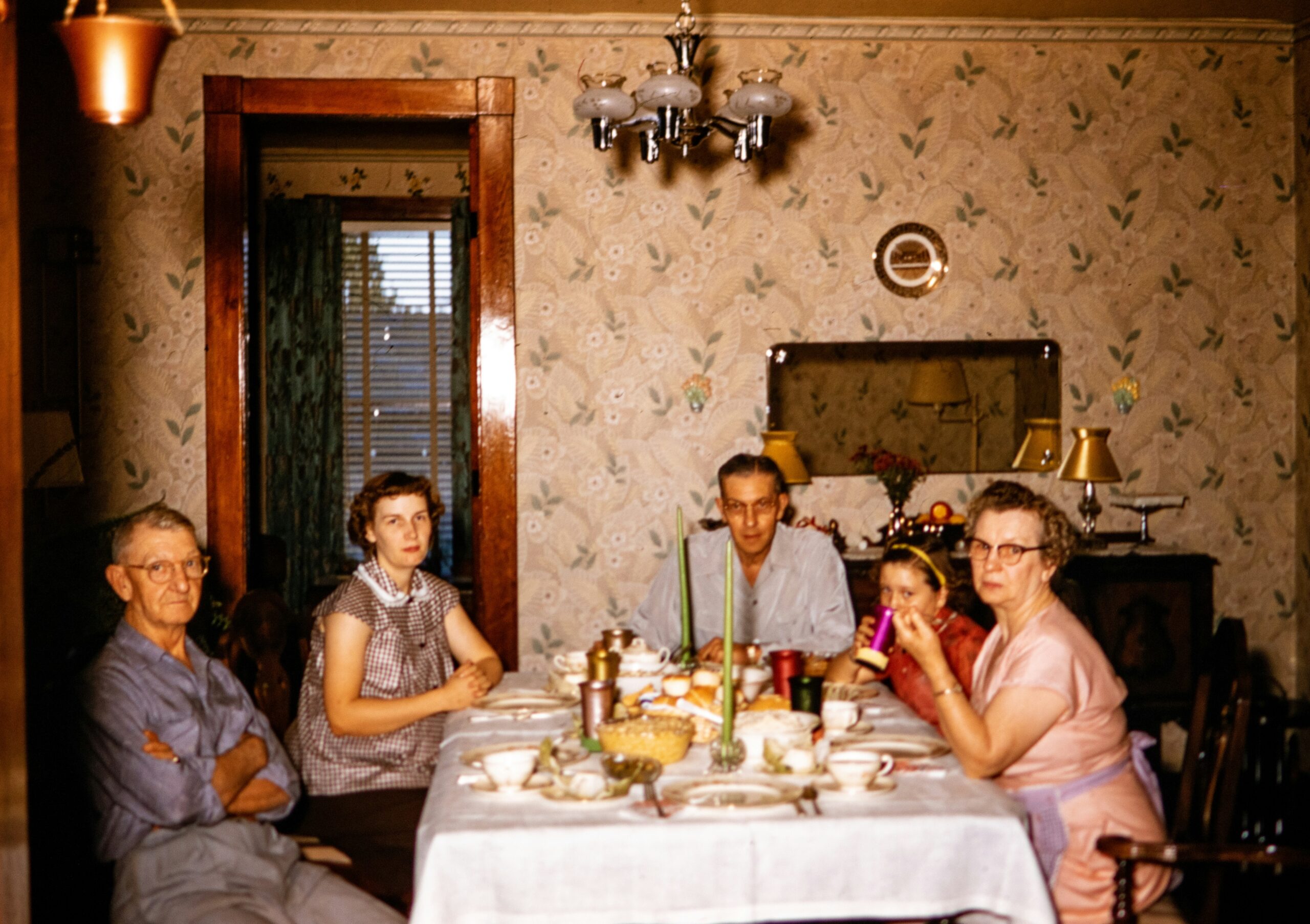
In the places where most people work, the most consequential employer brand decision gets made long before anyone reads a job posting, often before the job exists, and sometimes before the candidate is old enough to work. It happens at a kitchen table, when cousin Josh mentions he’s thinking of applying at Carl’s Heating & Air and Aunt Charlotte does that thing with her lips and Grandpa Joe says “Oh let me tell you about Carl’s dad back in high school!”
Reputations formed that way also outlast the people who earned them, which tends to frustrate new leadership more than anything else. A CEO who arrives promising a fresh start inherits the layoffs everyone’s parents remember and the way the last merger was handled. A fresh rebrand isn’t going to sway many opinions.
Whether any of that can be managed, in the strategic sense the employer brand world means it, is a question I keep going back and forth on. Reputation in a city of a few hundred thousand responds to behavior over years rather than campaigns over quarters. Meanwhile, the HR director at the community hospital already knows which manager’s name comes up in the grocery store checkout line. She also knows very few folks above her in the org chart want to hear it.